How adult ideologies shape the representation of children on big screen.

Representation is a way of presenting certain social values such as ethnicity, gender, nationality, or belief to a targeted audience. Besides, representation also holds the power to influence or shape the audience’s knowledge about these values, particularly when they are filtered through ideological or cultural biases. In this way, as Stuart Hall (1997) in his remarkable account on cultural representations also suggested: “Representations sometimes call our very identities into question. We struggle over them because they matter – and these are contests from which serious consequences can flow. They define what is ‘normal’, who belongs – and therefore, who is excluded” (Hall, 1997, 10). Following Hall’s idea of representation as a phenomenon that can challenge identities and influence the meaning-making process, representation in media can be understood as a way of constructing social realities that express, dominate, or suppress specific ideas and desires, which in turn run ideological functions in the society.
Stuart Hanson (2000) suggested that representation and ideology endure a relationship that is prevalent throughout various forms of media as media retains the power of transforming and influencing ideologies through representation. This is done by including or excluding certain groups, or ‘representing’ them after an active process of selection and filtration to dominate or suppress specific ideas. Like all media forms, “the cinema, does not re-present ‘reality’ despite the connotations of the term ‘representation’” (Hanson, 2000, 146). Representations in cinema, as Hanson (2000) alluded are in fact, ‘constructed realities’, carrying the burden of dominant adult ideologies, discourses, and desires, such as racism or identity biases. Instead of reflecting on the world as it is, the cinema rather represents the world to the viewer through the structuring of ideas, molding the audience’s ideologies and perceptions of the world accordingly. In cinema, films employ characters as mediums of representing these constructed realities. One way to further comprehend ideological representation in films is by conceptualizing how films represent children and childhood.

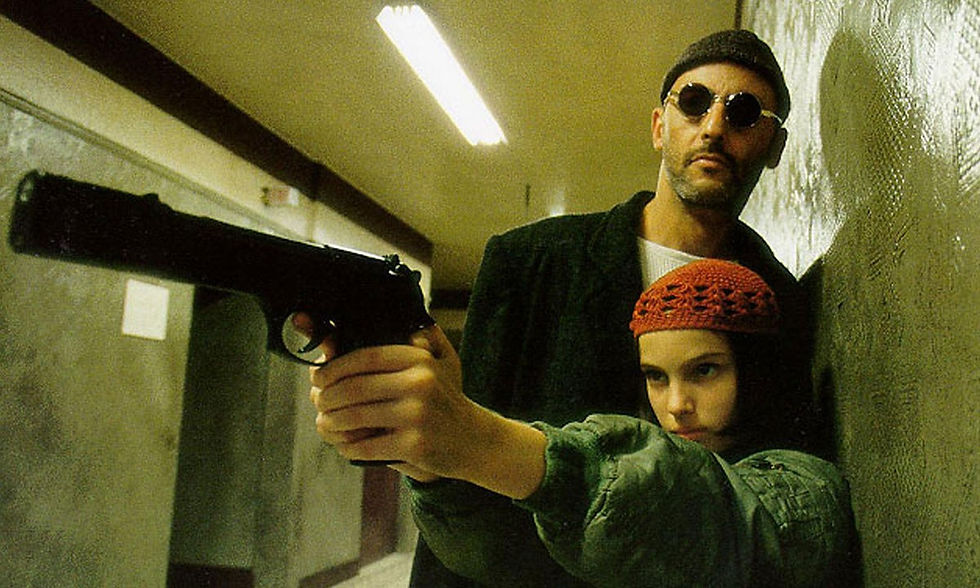
Representation of children and their varying roles on-screen cross-cut diverse aspects such as gender, class, sexuality, belief system and nationalism, etc. However, referring to Hanson’s (2000) argument, these roles do not always present reality about children. Instead, the representation of children on screen is constructed by adults who selectively direct and determine their roles on screen. Hence, whose version of gender, class, sexuality, believes and nationalism is being represented through children and their childhood remains an important question to be considered. For example, Walkabout (1971) is a film about two white children who encounter an Aboriginal boy in the desert. The film is the epitome of how ideological racism and cultural conflict between modernity and tradition, embedded in adults, are passed on to be represented via children. Similarly, Leon (1994) questions the preconceived and conventional notions of gender, sexuality, and childhood by showing characteristics of adult women in a 12-year-old girl Mathilda. However, Mathilda’s figure is directed and constructed by a male director and not by the child herself, suggesting that the films portray the adult’s desires and not the child’s own. Consequently, the child on the screen becomes the symbolic and emblematic value of adult perspectives.

The above discussion indicates the symbolic significance of children in films. There is a plethora of work on representation and cinema, and some interesting work specifically on children and Western/Hollywood cinema. However, not enough has been written and discussed on children in the world cinema, particularly in the context of Hindi cinema. Scholars like Karen Lury, Stuart Hanson, Emma Wilson, and Shakuntala Banaji provide theoretical frameworks around the subject and relevant case studies to explore the poetics and politics around the representation of children in world cinema. Building on that provided the theoretical framework, this essay explores how representations of children and childhood on-screen are shaped by adult ideologies and desires, particularly in the context of Hindi Cinema. Firstly, it argues that children represented on screen are constructions of adults and their perceptions of the world. Although Hindi films say something about child and childhood, their discourse on children and childhood is predominantly situated within domains of an adult and articulated by adults in ways that address adult issues. They express adult desires, fears, weaknesses, strengths, and their perceptions of family and sexuality, etc. Secondly, children on screen and their childhood are emblematic of adults i.e., they are not only the carriers of adult desires and ideologies but also shape the ‘adulthood’ presented on screen. This leads to the appearance of children on screen peripheral, and merely supportive of the main storyline. The essay explores these ideas in light of the theoretical framework presented by the above-mentioned scholars alongside textual analysis of Hindi cinema.

Before proceeding towards the main research question, it is important to ask whether all representations of children in films are ideological constructions? Boyhood (2014), a real-time movie shot across the period of 12 years depicts a child’s actual transformation into adolescence, questions this argument. It is therefore essential to be stated at the outset of this essay that not all movies are necessarily filtered through the adult gaze. Another contemporary film, The Florida Project (2017) which follows the life of a six-year-old girl child and her mother, also shows that some films, present an authentic representation of children and childhood. Nevertheless, these films are rare, and their motives may be entirely different. Unlike films like Walkabout or Leon, where children merely act as contributors to adult agendas of the main storyline, the purpose of films like Boyhood and The Florida Project is to show the real transformation of a child. The focus of this essay, however, is the films in which children and childhood are ideological constructions of adults, acting as vehicles of conveying adult perspectives that perhaps have nothing to do with children. In light of this argument, the essay also sheds light upon some of the key consequences of representing children and childhood in such a way that solely serves adult agendas.

Drawing on textual analysis of films in the world cinema, Karen Lury (2010) draws a noteworthy analysis in her work on the child in the film. Her work points out the films that star child characters and childhood, essentially targeted at adult audiences and for adult issues. She contends that in using the child as a tool to tackle adult issues or issues created by adults such as children’s abandonment, murder, the trauma of war, etc., the films usually situate child and the childhood as ‘other’; “other to the supposedly rational, civilized, ‘grown-up’ human animal that is the adult” (Lury, 2010, 1). Ironically, these films as Lury (2010) further argues, show children and their exploitation by adults in ways that might be viewed as inappropriate for a child audience, whose own narrative becomes irrelevant or often neglected. Lury (2010) presents a close analysis of Japanese horror films to confirm her argument and claims that the child in films functions as an ‘inhuman entity’, emerging because of some mythic phenomenon or noncorporeal process and therefore, ‘other’ for the audience. The appearance of a child on screen as the ‘other’ as Lury (2010) pointed out, is an adult construction, serves adult visions, and is targeted at the issues of adult interests. Such a representation of children in films as ‘other’ or appropriation of their roles in ways that would benefit adult storyline can also be contextualized in contemporary Hindi cinema, popularly known as ‘Bollywood’.

The appearance of children in Hindi cinema as adult constructions, those who put forward adult perceptions of the world is quite prominent. Child or childhood is frequently presented to convey adult’s ways of thinking, and doing, leaving behind the child as ‘other’. For instance, a popular film Taare Zameen Par (2007) explores the life of an 8-year-old dyslexic child Ishaan who struggles to cope in his daily and academic life. However, it is crucial to note that child’s character is a construction of an adult who appears to be communicating adult issues relating to parenting and teaching and is aimed at an adult audience, not for children. In this context, the child in this film despite being the lead and central character does the job of picturizing adults’ ways of being. Additionally, the life of Ishaan is depicted from adults’ perspectives, and he becomes an object of adult love, care, punishment, or hatred. E.g., there are scenes when Ishaan is represented as an innocent and struggling child through his mothers’ perspective. Towards the end of the film, Ishaan is seen ‘differently’ or as a ‘special’ child from his teacher’s perspective. In portraying a child’s character from the perspective of a mother or the teacher and showing the child only as an object of love, hatred, or need, the film tends to prioritize adults’ point of view over the child’s point of view. Lury (2010) in her analysis of Japanese horror films revealed how films often see the child character through an adult’s perspective, sidelining how a child sees himself. As seen in the context of Ishaan, and how he is represented through his mother’s or teacher’s perspective, the film seems to overlook how Ishaan sees himself and experiences the world from his point of view. In doing so, the film also tends to marginalize the children’s’ subjectivity i.e., as Lury (2010) puts it, their emotions, their experiences, their thoughts, and more specifically, their ‘childish-ness’. This ‘childish-ness’, his emotions and experiences are overly determined by adult priorities and interests as the film discloses. All the aspects of a child on screen thus, emerge as the production of an adult’s point of view which causes the ‘otherization’ of the child on screen as well as children in the audience.

Another significant evidence to demonstrate how the representation of children as ‘other’ and childhood in Hindi films is shaped by adult contemplation is how children or childhood is used as a plot that significantly shapes adults’ course of lives. For instance, as Shakuntala Banaji (2017) discussed, “children still appear intermittently as devices in a few commercial Hindi films – go-betweens for adult lovers (a role epitomized by Sana Saeed’s character little Anjali in Kuch Kuch Hota Hai (1998), who unites her father with his lost love), the pretext for adult violence (Utraksh Sharma who plays Tara’s half-Pakistani son in Gaddar: Ek Prem Katha (2001)” (Banaji, 2017, 12). There are several other Hindi films in which children carry the burden of shaping adult desires, and act as a backdrop for adult stories by acting either as witnesses, go-betweens, or origins of adult stories. For example, the romance comedy Hum Hain Rahi Pyar Ke (1993), a love story that begins when three children try to rescue and provide shelter to a runaway girl. The film although casts three children have nothing to do with children or child audience. It uses children again as go-betweens, witnessers, and vehicles to leverage the main story line made for adults. The discussion asserts that children in Hindi films are the creation of adults, who are there to depict and articulate desires and matters of adults. While using children as devices to set the backdrop for stories directed by adults, deals with adults, and directed for adults, these films shape new idealizations of child, childhood, and families. These new idealizations, in turn, give rise to new ways of configuring children, childhood, and families amongst the audience as echoed by Emma Wilson (2003). In Hindi films, this can also be observed in the case of the role played by little Anjali in Kuch Kuch Hota Hai (1998), an 8-year-old ‘cute’ little girl who after the demise of her mother, unites her father with his lover through these series of interesting events. Little Anjali received huge public attention for her character’s role, as an embodiment of cuteness, shaping new notions of child and childhood in the eyes of the audience. Consequently, this can lead to the marginalization of children in real life who may be found different from those who carry the burden of ideological and adult constructions on screen. The example also points towards the previous discussion around children’s’ own subjectivity on screen, which often gets overshadowed by dominant adult ideas and discourses.

To further grasp the emblematic and symbolic role played by children in Hindi films who often set a stage for adults, Banaji (2017) utilizes Corey Creekmur’s (2005) theoretical framework of the ‘maturation dissolve’. According to Creekmur, as Banaji (2017) notes, “‘maturation dissolve’ is ‘a temporal leap maintaining continuity of character’ and suggests that the past is always painfully, even traumatically, present.” (Banaji, 2017, 10). Based on this idea of ‘maturation dissolve’, Banaji (2017) discusses how childhood in Hindi cinema is commonly shown as a pretext for adult identity and actions. Mentioning Creekmur’s words, she stated: “Characters in Hindi films are persistently wounded yet driven by their childhood pain, drawing a direct causal – and conscious chain between the suffering of youth and the acts of adulthood.” (Banaji, 2017, 10). Adulthood in Hindi films thus is shown to be the continuation of childhood and adult actions are shown to be based on childhood experiences. It is in this manner that childhood and children are again, represented to justify or fulfill the desires of adult lives only. While childhood is staged as a background on which adulthood is shaped, Hindi films prioritize following the adult life over dwelling deep into the childhood traumatic experiences. Hence, childhood and children often remain on the peripheries of stories that are directed by adults and for adults, and primarily to support various aspects of adulthood.

As explained above, psychoanalytic approach to examine the adult construction of children and childhood can be exemplified in the context of the blockbuster Hindi film Highway (2014). The film sketches story of Veera, a young bride-to-be who is abducted one night before her wedding. Veera develops a sense of comfort with her abductors. She experiences joy, freedom, and peace while she is away from her family and realizes that she does not want to go back to her house where she was molested by her uncle as a 9-year-old. Her sense of freedom and comfort, love and care for her abductors, and willingness to stay away from her family emerges from the horrors of her childhood as the film illustrates. As a result, Veera begins to see her kidnapping as a blessing. Similarly, Mahabir, one of the kidnappers also happens to be a runaway turned criminal, who experienced child abuse himself and witnessed his mother being sexually assaulted when he was a child. Both personalities in this sense, are shown to be shaped by their childhood traumas. The mutual childhood trauma drives Veera away from her family even after she is returned home. The ending shows Veera in the mountains where she peacefully imagines her 9-year-old playing alongside a boy who is supposedly Mahabir as a child. The childhood in this film serves as the backdrop for adult characters and their acts, and continuation into adulthood. It is, as demonstrated through this discussion, constructed by adults, as a ground that feeds into adult identities, issues, desires, and ideologies, as also asserted by Banaji (2017) in the light of Creekmur. There are plenty of other Hindi films in which representation of childhood serves the similar purpose of fulfilling adult actions. For example, in Kal ho Na ho (2003), Naina’s unhappy demeanor and strong resistance towards marriage are shown to be an outcome of her childhood discomforts. It can be thus argued that the representation of childhood on screen remains molded by adult ideologies and desires, to showcase adulthood only. However, the discussion also raises an important question; to what extent, as shown in these films, our childhood shapes adulthood actions and desires? this is a very subjective question and the extent to which every individual carries the burden of their childhood into adulthood may vary from person to person. Hence, the authenticity of the way Hindi films depict childhood as a stage on which our adulthood is based is debatable and can be contested by real life experiences.
Conclusion:
Various scholars have theorized the representation of children and childhood in the cinema which remains influenced by adult desires and ideologies. This essay attempted to explore such a representation of children and childhood in the context of Hindi cinema. Considering the theoretical framework and textual analysis of some of the Hindi films, this essay concludes that representations of children and childhood in Hindi films are constructions by adults and for adults. Child and childhood representation are targeted at an adult audience and symbolize dominant social issues, ideas, visions, and ideologies from an adult’s point of view while disregarding the child’s point of view and subjectivity. Moreover, the representation of children and childhood in films remain marginal as the motive is to feed into adulthood only.
By representing children and childhood in a specific manner, which remains a process of adult selection and filtration based on their desires and ideologies, cinematic representations also possess the power to influence the meaning-making process and shape new ideas and configurations for the audience, as discussed earlier in the light of Wilson (2003). These new configurations define ideals of ‘normal’ which may include or exclude audiences who may appear marginal or different from those represented on screen. In this way, ideologically constructed representations may also cause a gap between children on screen and the audience as they do not necessarily re-present audience’s notions of reality. The argument affirms Hall’s (1997) and Hanson’s (2000) discussion around consequences of ideological representation, suggesting that representations can question our identities by determining who is included and who is excluded. While this process of inclusion and exclusion continues to set new ideals by ideologically constructing representations in cinema, children have the least agency to do anything about that process. As a result, and as ironic as it may appear, the responsibility once again falls onto the adults to dwell deeper into aspects of children and childhood and child’s representation on screen. Yet again, it gives rise to the same question that is of concern here; in dwelling deeper into the subjectivity of child and aspects of childhood, how do adults keep their own biases aside? This is achievable in films like Boyhood or The Florida Project that are solely to depict children and childhood. However, it requires attention from scholars and experts in the field when it comes to removing adults’ biases from children’s representation in films that are made for adult audiences and mostly for adult issues.
References:
Banaji, S. (2017). “Bollywood’s Periphery: Child Stars and Representations of Childhood in Hindi Films.” In Childhood and Celebrity, edited by Jane O’Connor and John Mercer, 53–65. New York: Routledge.
Boyhood, 2014. Film. Directed by Richard Linklater. America: IFC Productions.
Hall, S. (1997). Representation: Cultural Representations and Signifying Practices. London: Sage Publications & Open University.
Hanson, S. (2000). 'Children in the film' in Mills, J. and Mills, R. (eds.) Childhood studies: a reader in perspectives of childhood. London: Routledge. pp. 145-160.
Highway, 2014. Film. Directed by Imtiaz Ali. India: UTV motion pictures.
Hum Hain Rahi Pyar Ke (we are travelers on the path of love), 1993. Film. Directed by Mahesh Bhatt. India: Tahir Hussain Enterprises.
Kal Ho Na Ho (Tomorrow may never come), 2003. Film. Directed by Nikkhil Advani. India: Dharma Productions.
Kuch Kuch Hota Hai (Something’s Happening), 1998. Film. Directed by Karan Johar. India: Yashraj Entertainment.
Leon, 1994. Film. Directed by Luc Besson. France: Les Films du Dauphin
Lury, K., 2010. The Child in Film: Tears, Fears, and Fairytales. London and New York: I.B. Tauris.
Taare Zameen Par (Like stars on earth), 2007. Film. Directed by Amir Khan and Amole Gupte. India: Amir Khan Productions.
The Florida Project, 2017. Film. Directed by Sean Baker. America: Cre Film, Freestyle Picture Company, Cinereach, June Pictures.
Walkabout, 1961. Film. Directed by Nicolas Roeg. Australia: Si Litvinoff Film Production.
Wilson, E. (2003). Cinema's missing children. London: Wallflower.


Comments